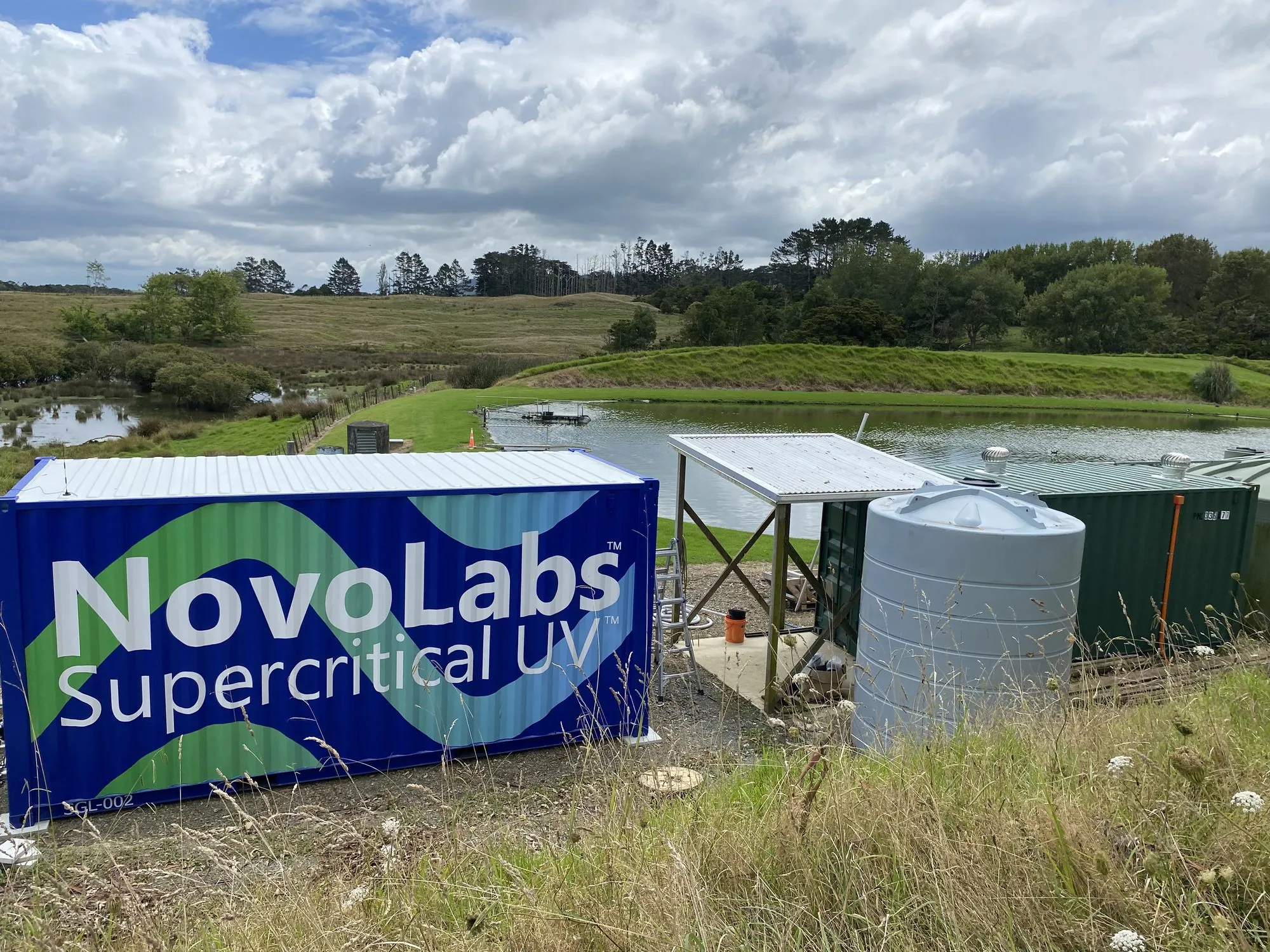
A median 3 log E. coli reduction over 187 days at Ahipara, on algal pond effluent at 3 to 7% UVT. Algae push pond effluent far too dark for conventional ultraviolet, but run as a thin, fast flow it can still be disinfected, with no chlorine and no filters.
Algae thrive in sunlit ponds. Their cells are fine and light, so they don't settle and they slip through screens, pushing suspended solids up and UVT down. Both swing with the seasons.
Conventional ultraviolet needs clear water, so pond plants usually end up adding filters, chemical dosing or chlorine.
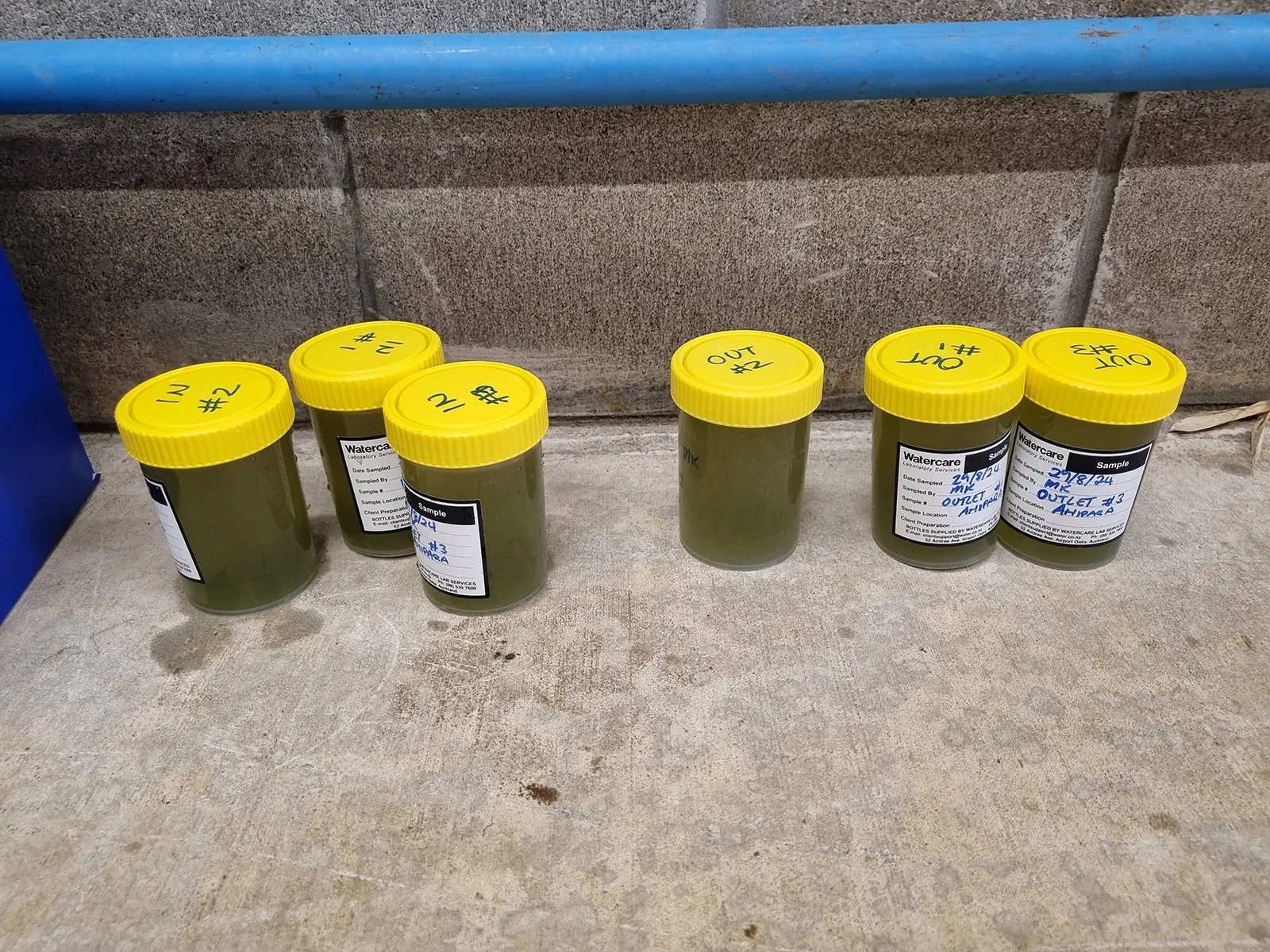
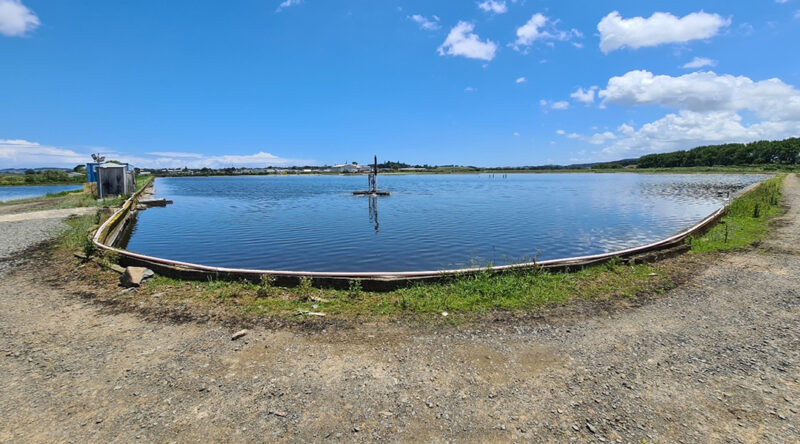
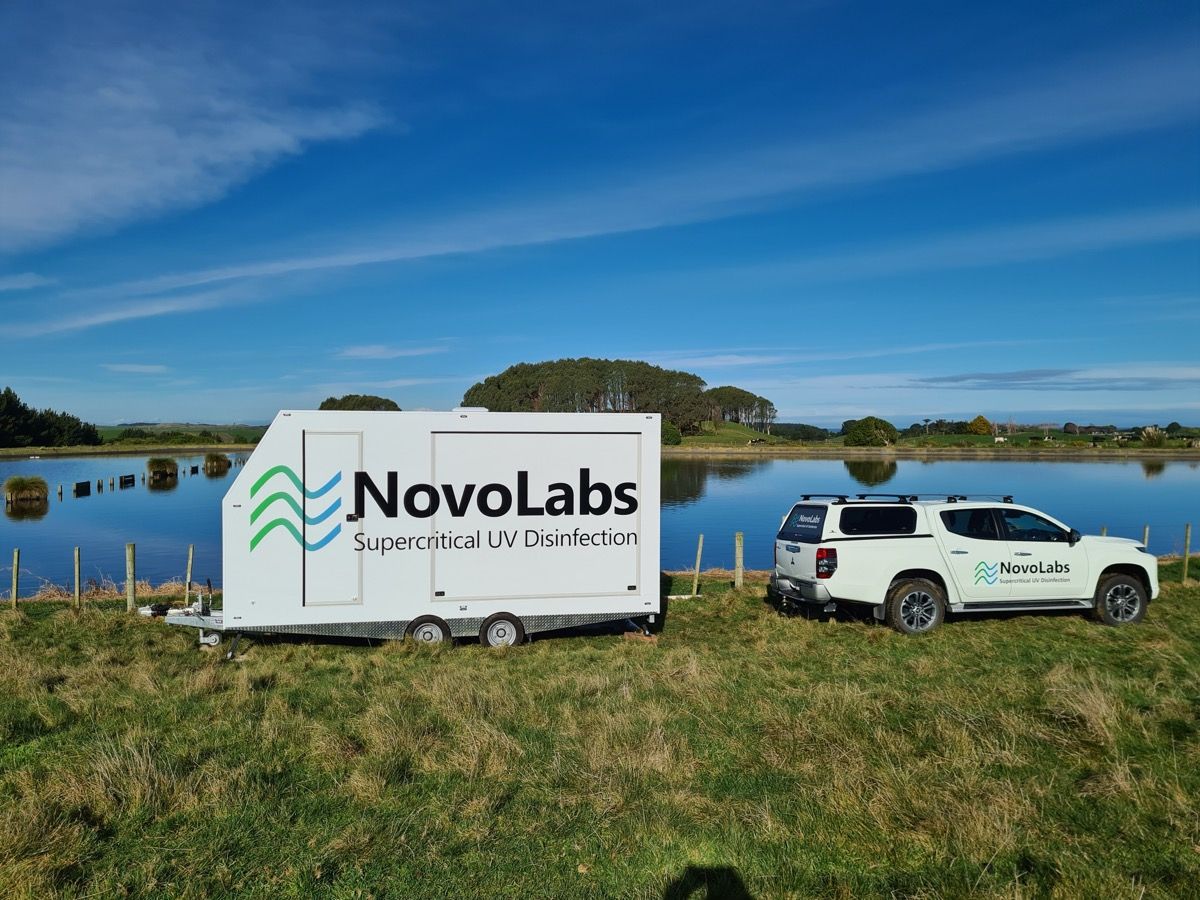
Ahipara, Far North District Council. Pond effluent at 3 to 7% UVT, with solids peaking at 252 mg/L. One module on the pond bank brought the plant back into compliance, with no chlorine and no solids removal: a median 3 log E. coli reduction over 187 days, against a 2 log target. Read the full case study
A town of about 5,000. Maturation pond effluent at an average of 7% UVT and 76 mg/L of solids. Over five days of sampling, the system met the consent at every setting, with E. coli at 20 or less per 100 mL on high power, from an average of 11,319. Read the full case study
A town of about 1,600. Pond effluent that had already passed through a filter bed still needed disinfection. At an average of 21% UVT and 50 mg/L of solids, E. coli fell from an average of 34,235 to 130 or less per 100 mL in every test, and to 10 or less on high power. Read the full case study
A single stabilisation pond. This site was sampled for viruses. Bacteriophage, a common stand-in for viruses, averaged 53,600 per litre going in. Across all the doses tested, they fell by an average of 3 log. Read the full case study

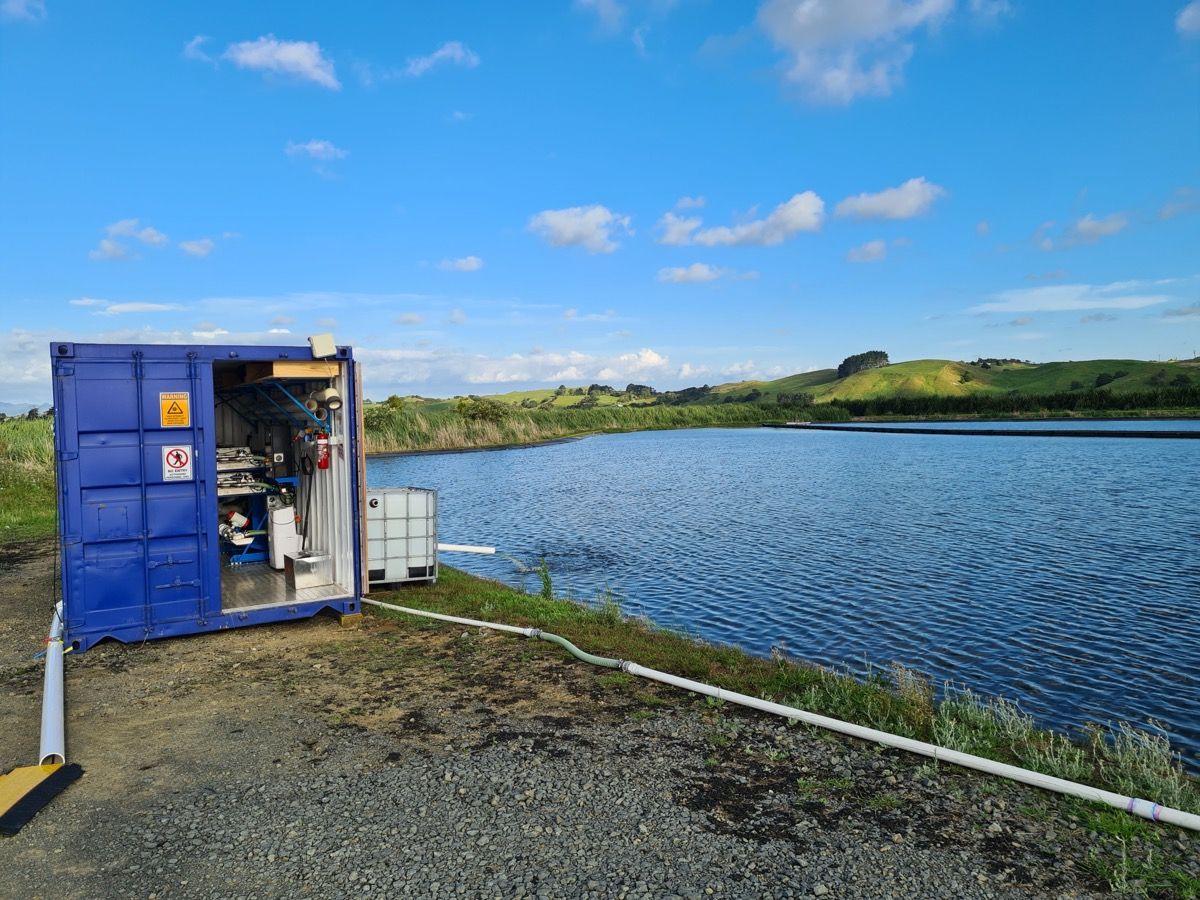
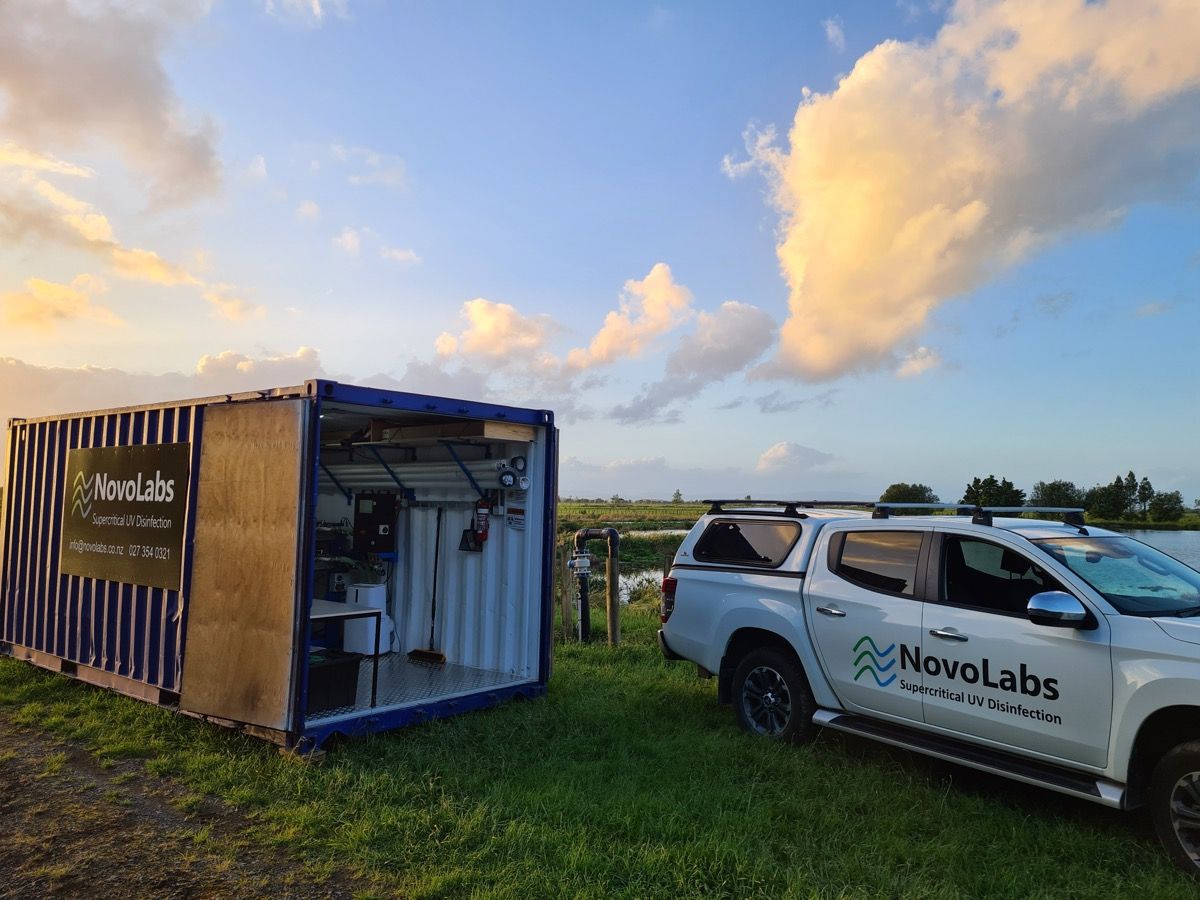
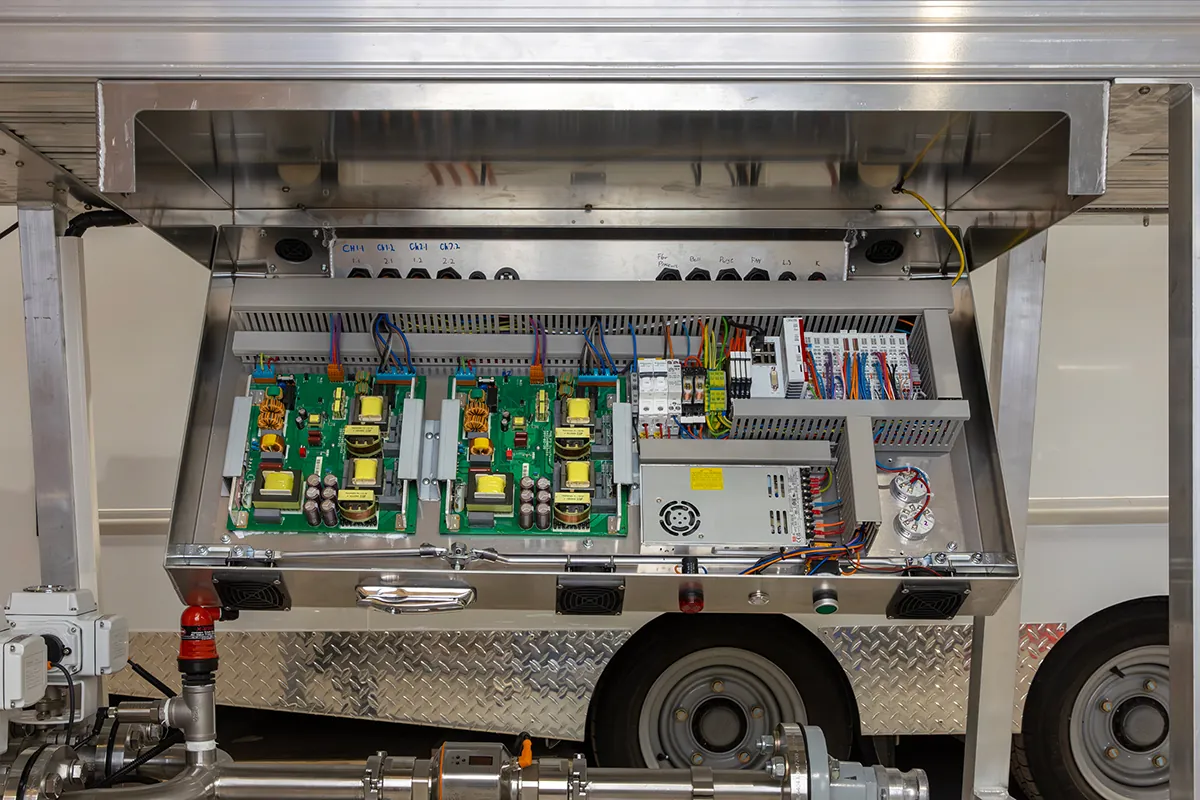
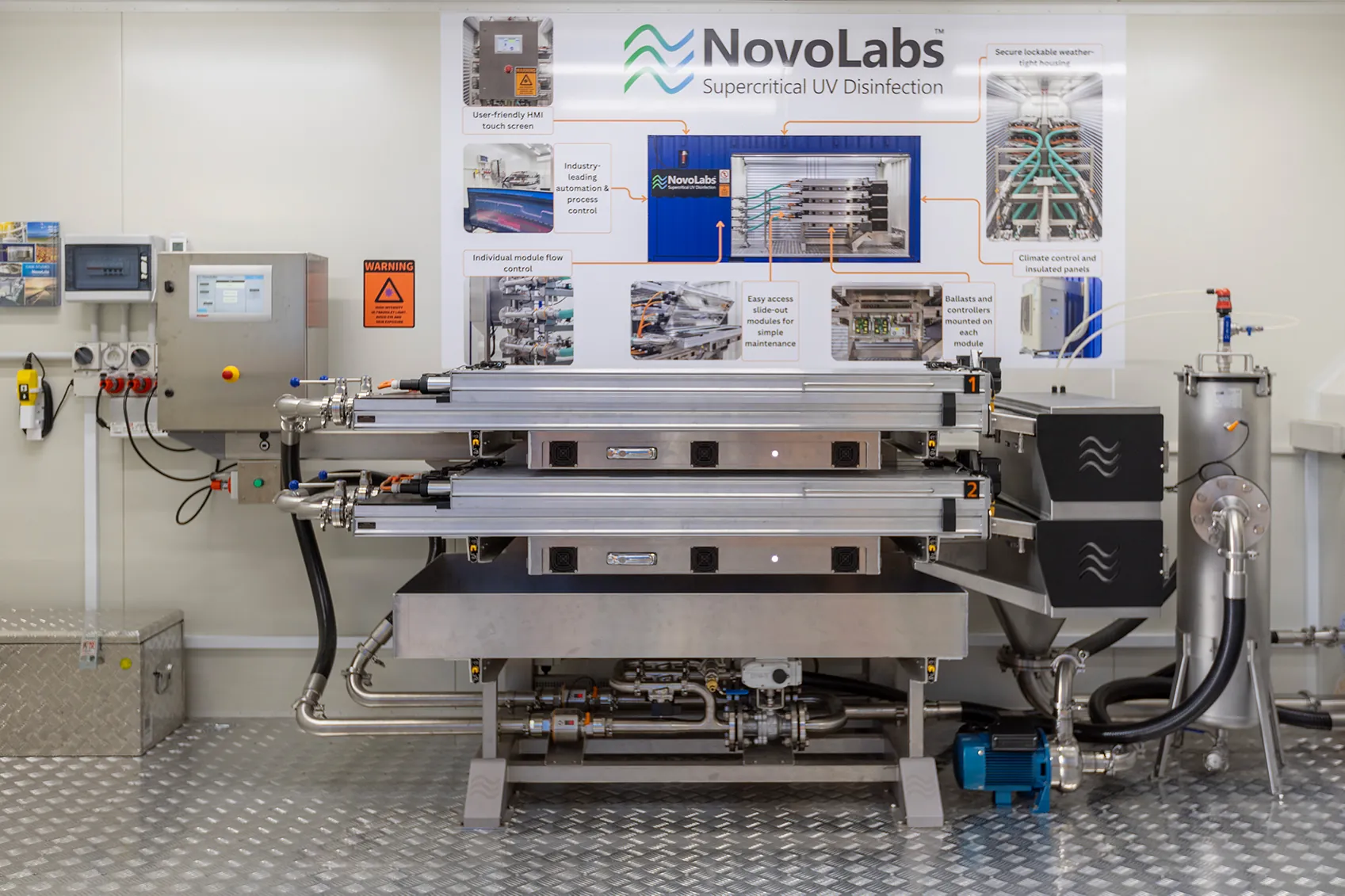
The effluent runs a few millimetres deep beneath lamps mounted above it. Light only has to reach through a thin layer, so the dose holds up when algae make the water dark, and nothing in the effluent touches the lamps.
Does algae stop it working?
No. At Ahipara it disinfected algal pond effluent at 3 to 7% UVT to a median 3 log reduction.
Do we need to filter the effluent first?
Not finely. Conventional ultraviolet systems need filtration down to around 50 microns. Ours only needs a 1 mm (1,000 micron) basket screen. You may still need solids removal if your consent limits TSS.
Can it replace chlorine?
Yes. Ultraviolet leaves no residual in the stream or river.
Tell us about your liquid and your limits, and we'll tell you if a trial makes sense.
Talk to an expertA median 3 log E. coli reduction over 187 days at Ahipara, on algal pond effluent at 3 to 7% UVT. Algae push pond effluent far too dark for conventional ultraviolet, but run as a thin, fast flow it can still be disinfected, with no chlorine and no filters.

Algae thrive in sunlit ponds. Their cells are fine and light, so they don't settle and they slip through screens, pushing suspended solids up and UVT down. Both swing with the seasons.
Conventional ultraviolet needs clear water, so pond plants usually end up adding filters, chemical dosing or chlorine.
Ahipara, Far North District Council. Pond effluent at 3 to 7% UVT, with solids peaking at 252 mg/L. One module on the pond bank brought the plant back into compliance, with no chlorine and no solids removal: a median 3 log E. coli reduction over 187 days, against a 2 log target. Read the full case study
A town of about 5,000. Maturation pond effluent at an average of 7% UVT and 76 mg/L of solids. Over five days of sampling, the system met the consent at every setting, with E. coli at 20 or less per 100 mL on high power, from an average of 11,319. Read the full case study
A town of about 1,600. Pond effluent that had already passed through a filter bed still needed disinfection. At an average of 21% UVT and 50 mg/L of solids, E. coli fell from an average of 34,235 to 130 or less per 100 mL in every test, and to 10 or less on high power. Read the full case study
A single stabilisation pond. This site was sampled for viruses. Bacteriophage, a common stand-in for viruses, averaged 53,600 per litre going in. Across all the doses tested, they fell by an average of 3 log. Read the full case study
The effluent runs a few millimetres deep beneath lamps mounted above it. Light only has to reach through a thin layer, so the dose holds up when algae make the water dark, and nothing in the effluent touches the lamps.
Does algae stop it working?
No. At Ahipara it disinfected algal pond effluent at 3 to 7% UVT to a median 3 log reduction.
Do we need to filter the effluent first?
Not finely. Conventional ultraviolet systems need filtration down to around 50 microns. Ours only needs a 1 mm (1,000 micron) basket screen. You may still need solids removal if your consent limits TSS.
Can it replace chlorine?
Yes. Ultraviolet leaves no residual in the stream or river.