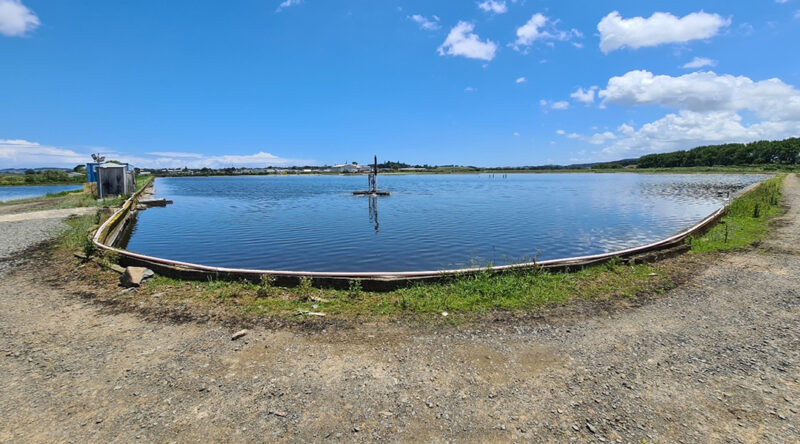
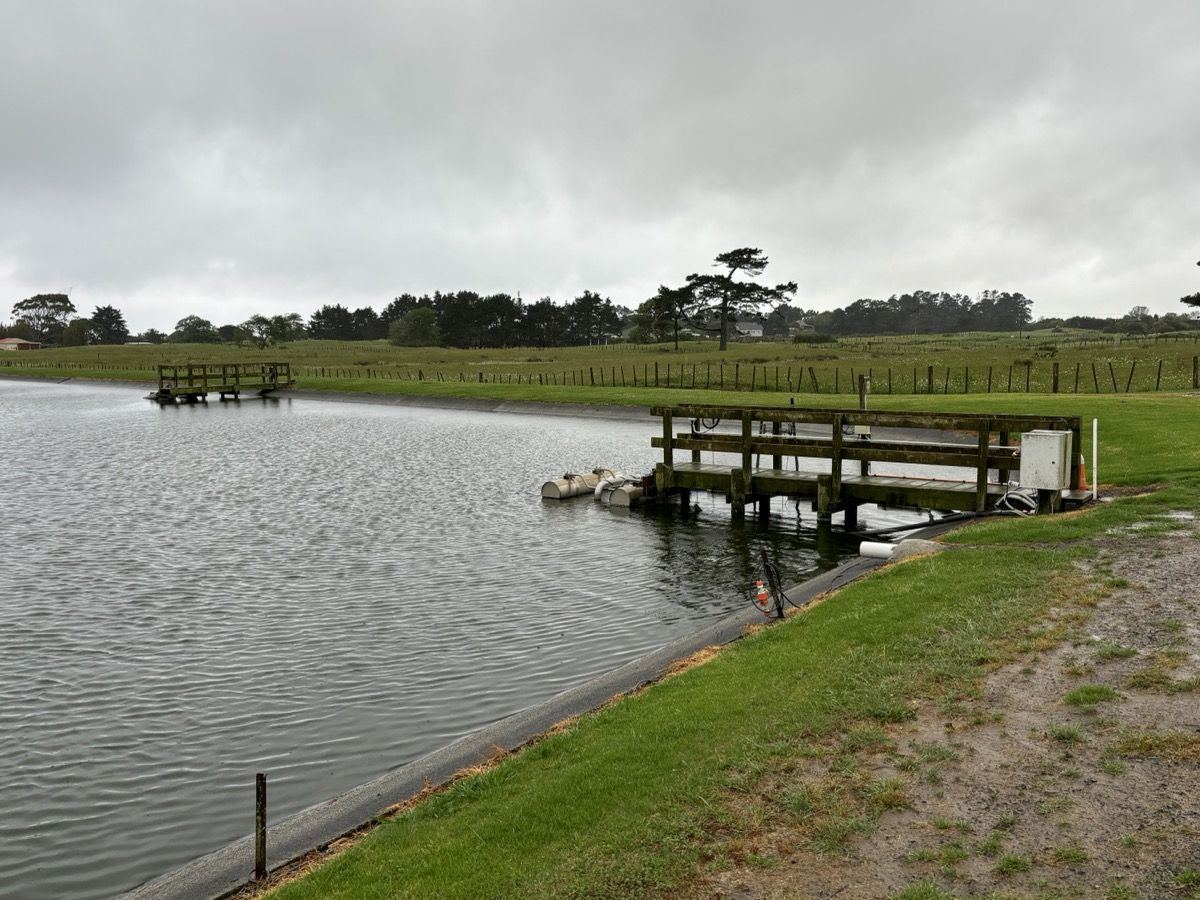
A median 3 log E. coli reduction at Ahipara, on algal pond effluent with suspended solids peaking above 250 mg/L and only a 1 mm basket screen in front. Solids shade bacteria and foul submerged lamps, so conventional ultraviolet needs finely filtered effluent. In a thin flow, fine filtration isn't needed.
Particles absorb and scatter light, bacteria hide inside clumps, and in submerged-lamp systems solids coat the lamp sleeves. That's why plants with high solids usually add filters or clarifiers before ultraviolet.
In a thin, fast flow, particles tumble through the light instead of shading a deep tank, and there are no sleeves to foul.
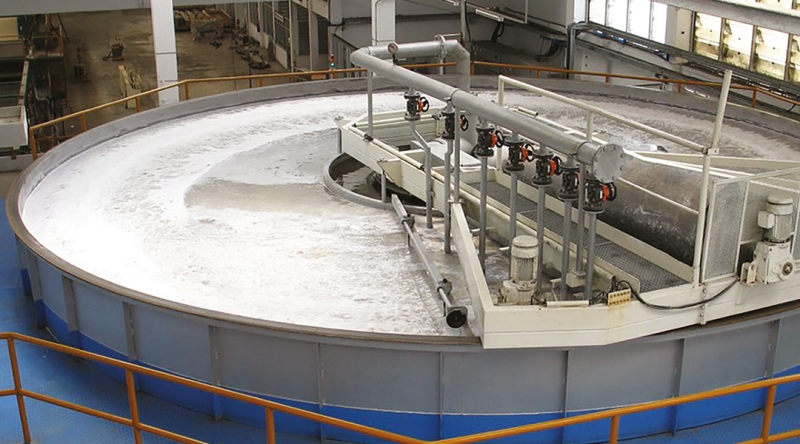
A large meat processor, South Island. Dissolved air flotation effluent at about 50 mg/L of solids and about 12% UVT, with E. coli in the millions. A 16-module system now treats the full flow, taking E. coli from about 4 million to under 1,000 per 100 mL.
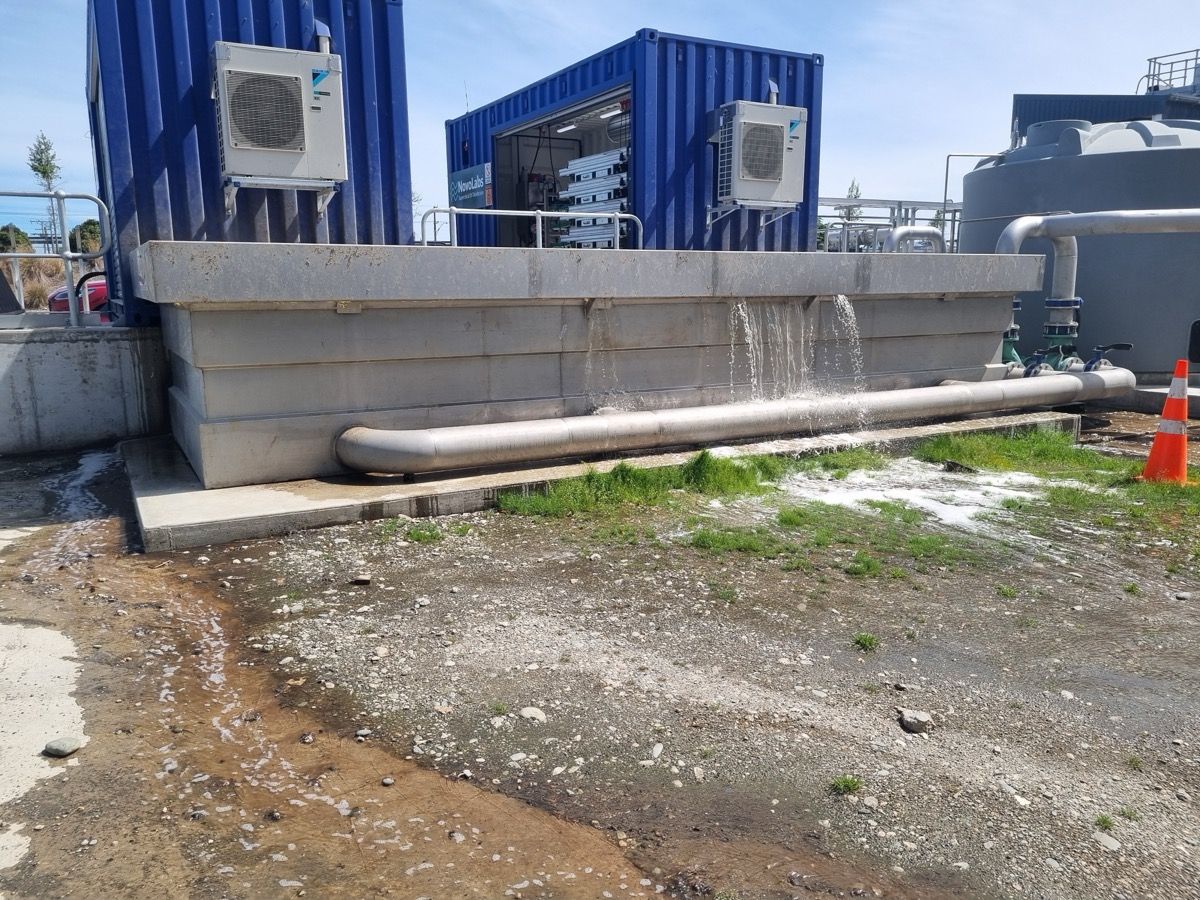
A council plant, side by side. Effluent at 50 mg/L of solids and 30.5% UVT, with no chemical dosing. The existing submerged-lamp system left 1,965 E. coli per 100 mL. Ours left 50, and below 10 on high power. Read the full case study
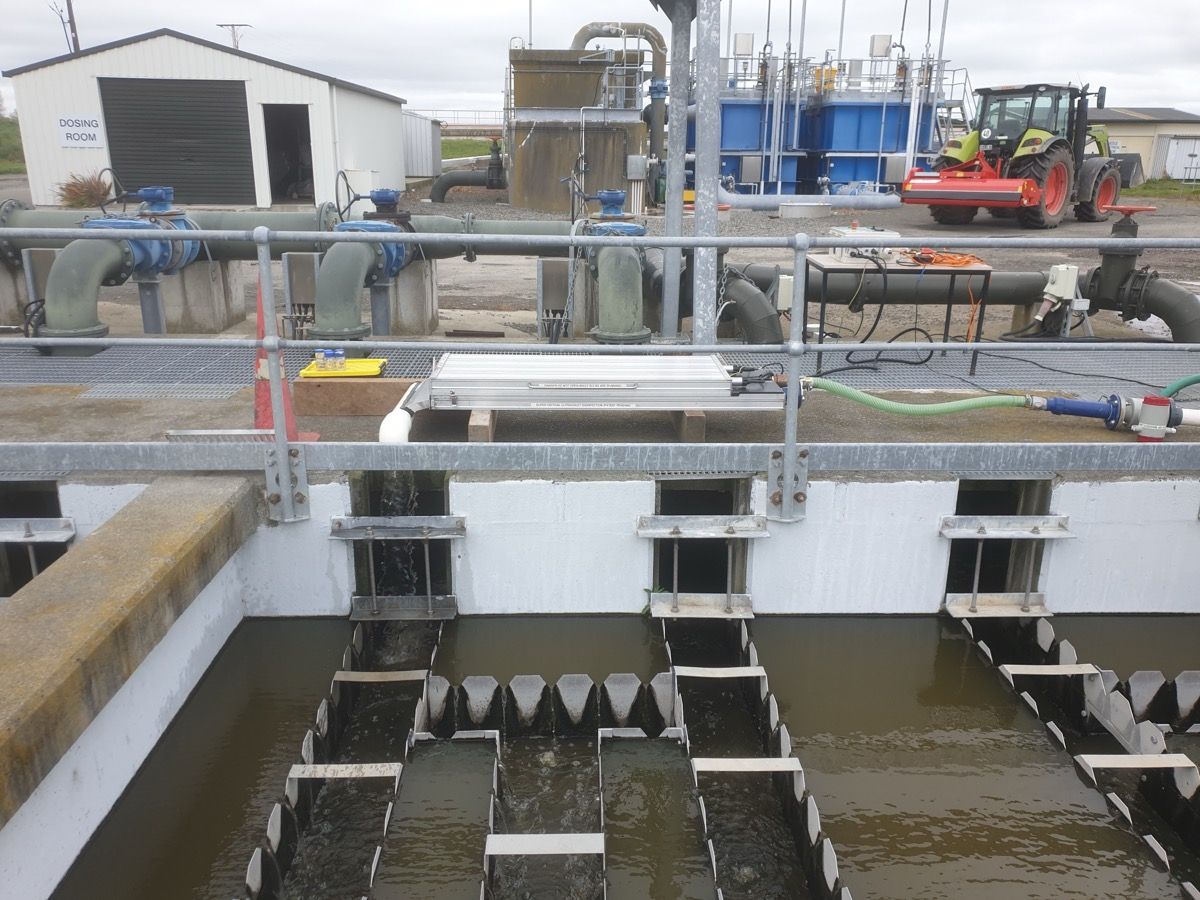
Ahipara, Far North District Council. Algal pond solids averaged about 160 mg/L over the first 187 days and peaked above 250. With only a 1 mm basket screen in front, one module delivered a median 3 log E. coli reduction over that period. Read the full case study
A fruit and vegetable processor. Even after screening, dosing and clarification, the wastewater carried suspended solids up to 400 mg/L at below 1% UVT. Sampled across a full year, enterococci fell by an average of 4.4 log. Read the full case study
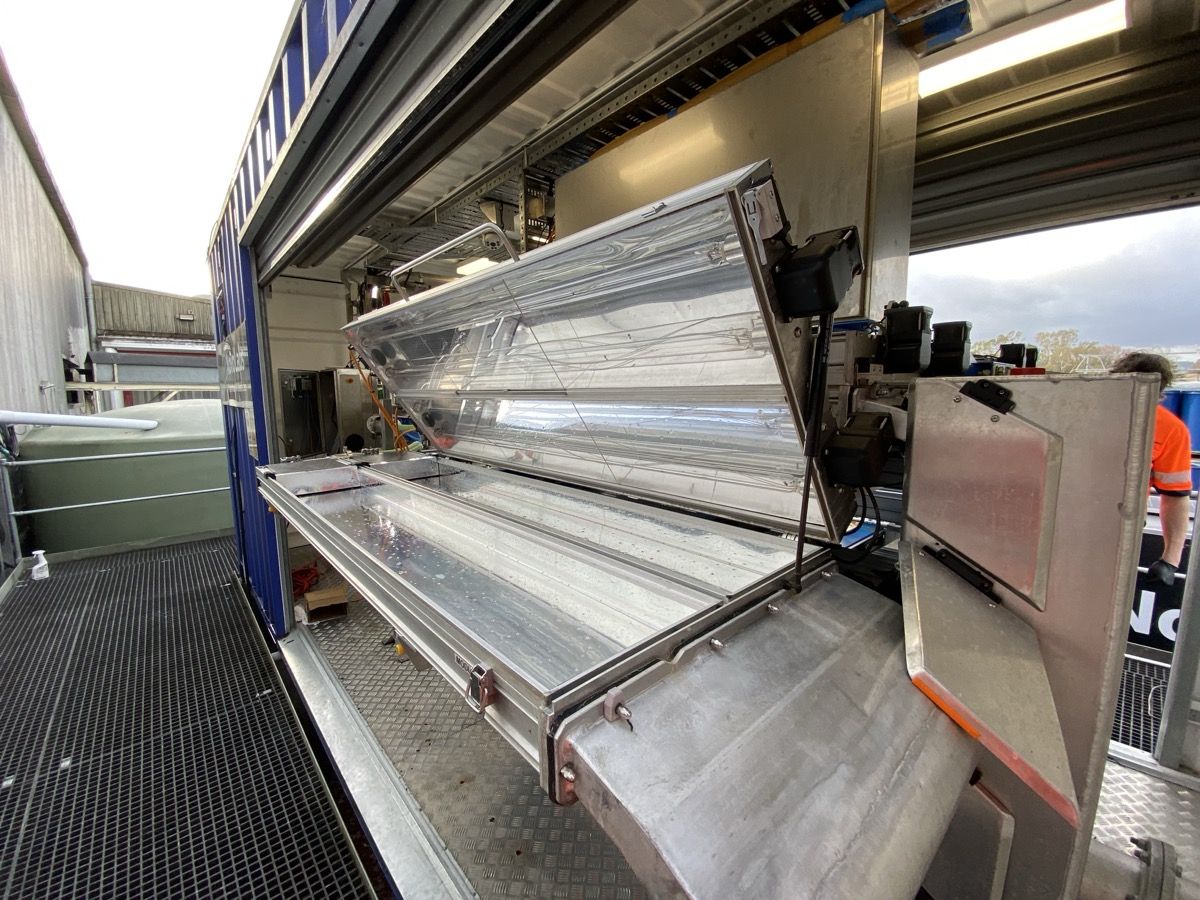
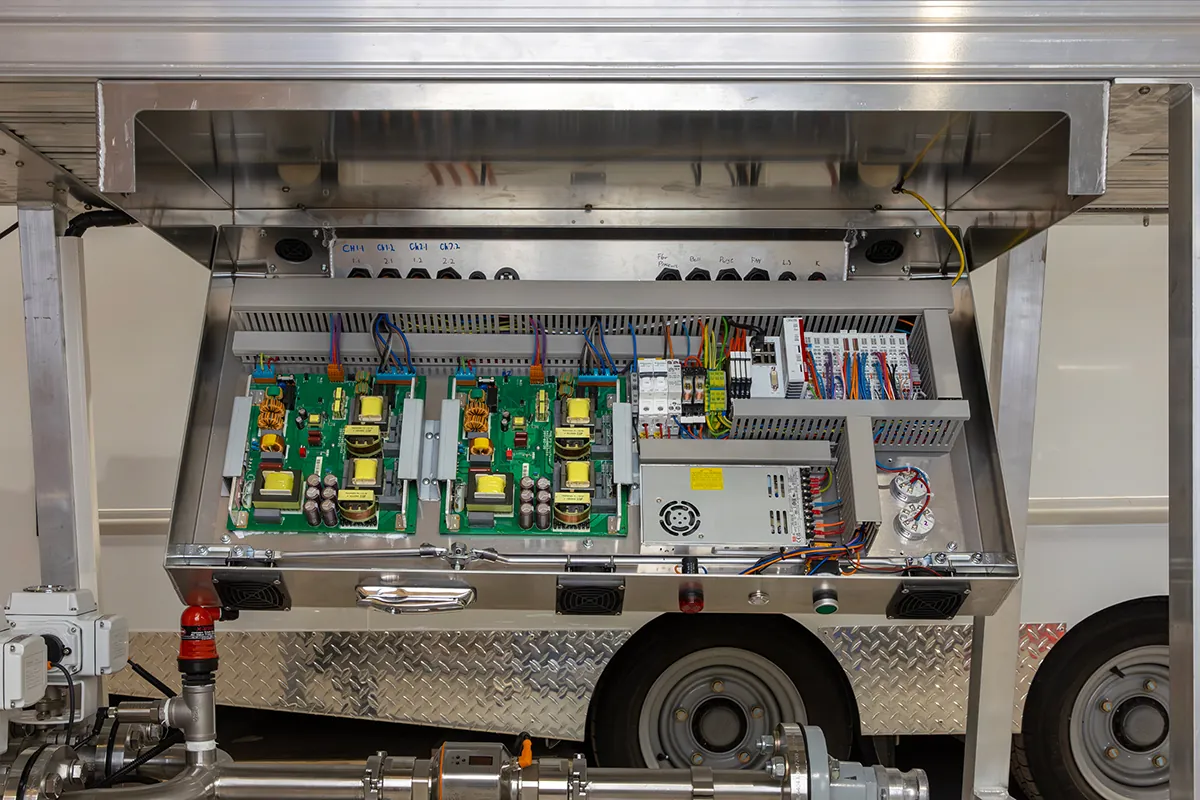
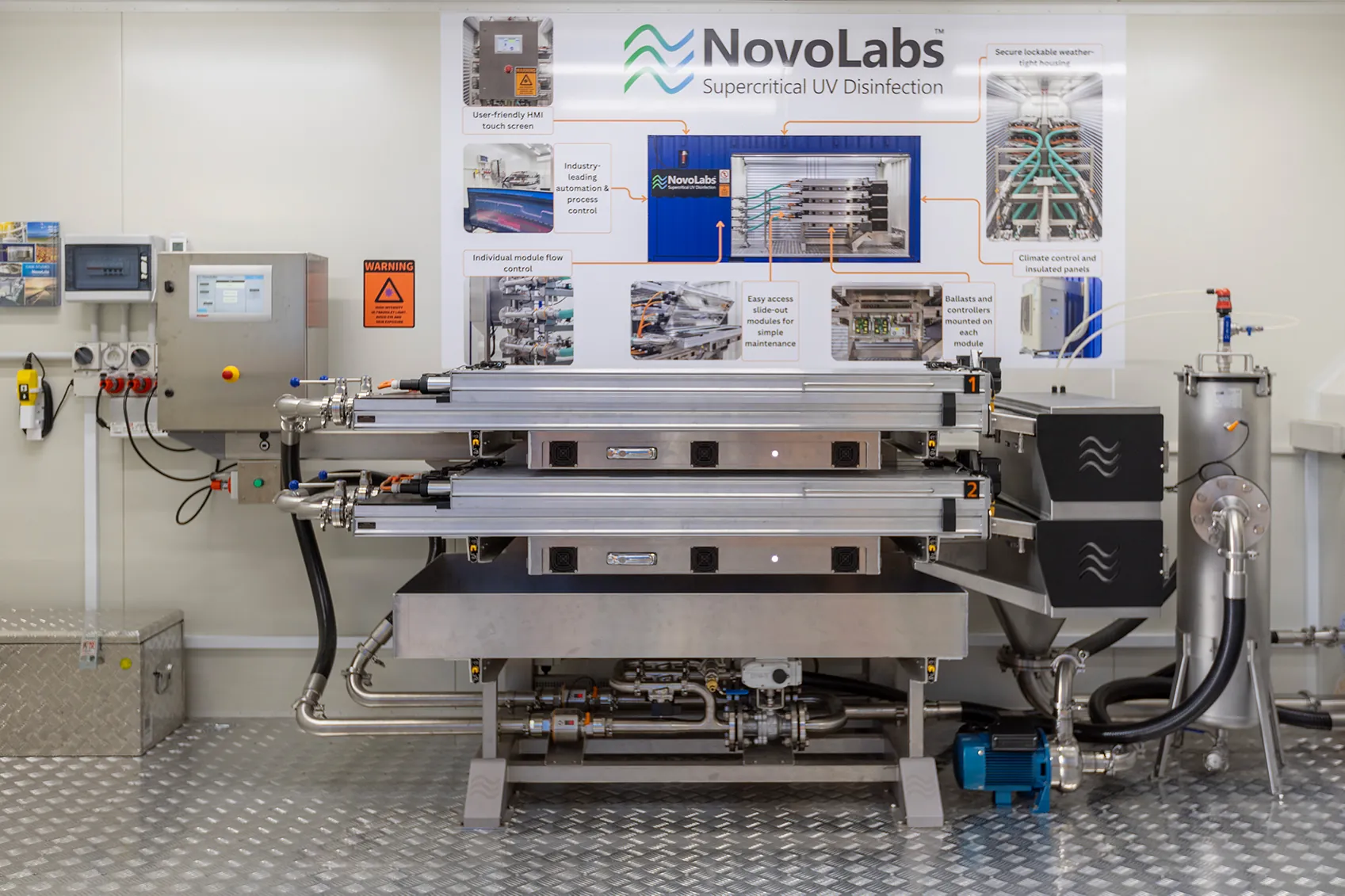
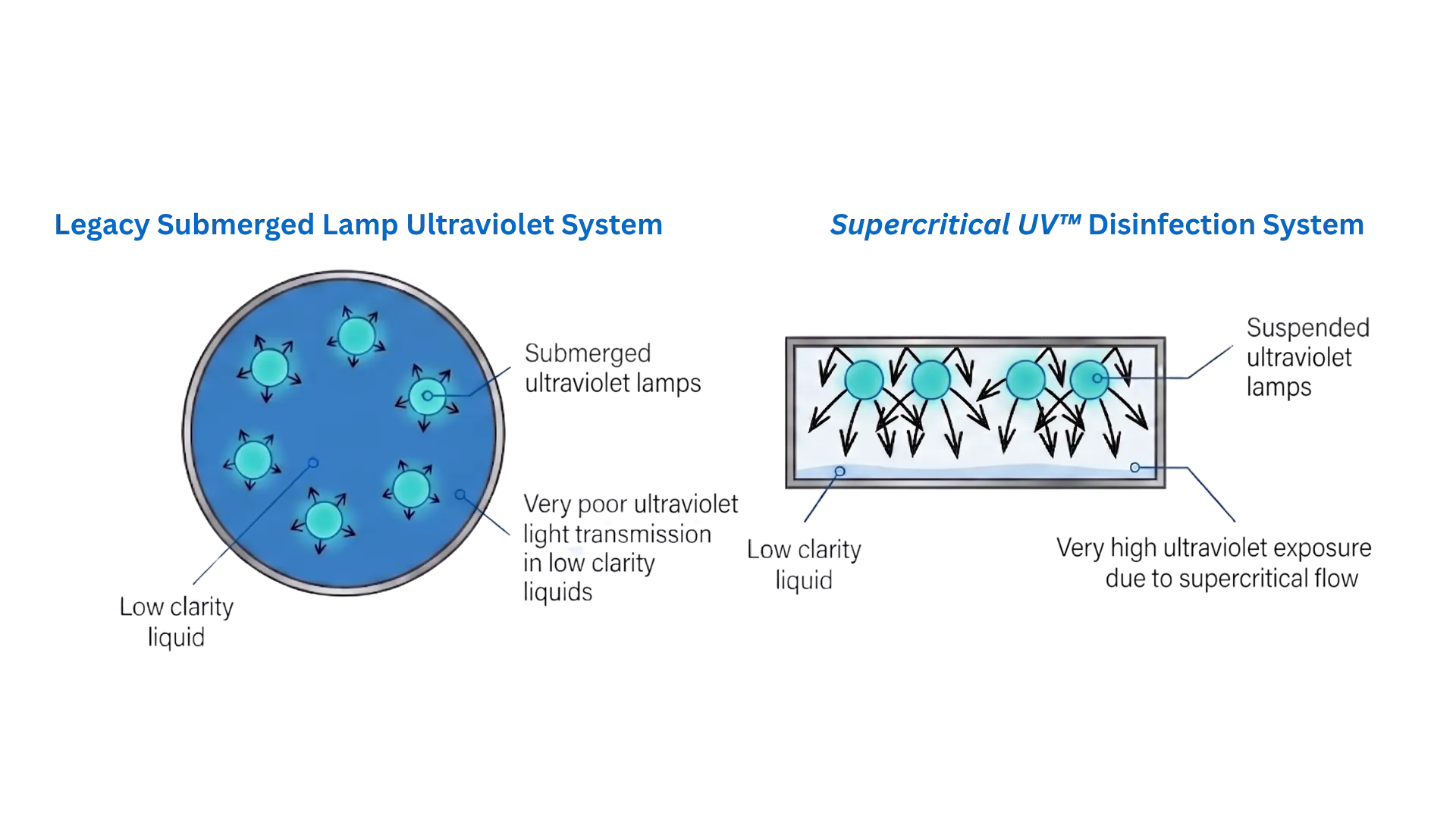
The liquid runs a few millimetres deep beneath lamps mounted above it. Nothing in the flow is far from the light, and the lamps never touch the liquid, so solids can't coat them.
Do we need a filter before the system?
No. A 1 mm basket screen removes anything big enough to block the flow.
Won't solids foul the lamps?
No. The lamps never touch the liquid. The channels are cleaned regularly instead.
Is there a limit?
Yes. During a spike of 660 to 680 mg/L at one meat plant the reduction fell to about 2 log, so solids control upstream still matters.
Tell us about your liquid and your limits, and we'll tell you if a trial makes sense.
Talk to an expertA median 3 log E. coli reduction at Ahipara, on algal pond effluent with suspended solids peaking above 250 mg/L and only a 1 mm basket screen in front. Solids shade bacteria and foul submerged lamps, so conventional ultraviolet needs finely filtered effluent. In a thin flow, fine filtration isn't needed.

Particles absorb and scatter light, bacteria hide inside clumps, and in submerged-lamp systems solids coat the lamp sleeves. That's why plants with high solids usually add filters or clarifiers before ultraviolet.
In a thin, fast flow, particles tumble through the light instead of shading a deep tank, and there are no sleeves to foul.
A large meat processor, South Island. Dissolved air flotation effluent at about 50 mg/L of solids and about 12% UVT, with E. coli in the millions. A 16-module system now treats the full flow, taking E. coli from about 4 million to under 1,000 per 100 mL.
A council plant, side by side. Effluent at 50 mg/L of solids and 30.5% UVT, with no chemical dosing. The existing submerged-lamp system left 1,965 E. coli per 100 mL. Ours left 50, and below 10 on high power. Read the full case study
Ahipara, Far North District Council. Algal pond solids averaged about 160 mg/L over the first 187 days and peaked above 250. With only a 1 mm basket screen in front, one module delivered a median 3 log E. coli reduction over that period. Read the full case study
A fruit and vegetable processor. Even after screening, dosing and clarification, the wastewater carried suspended solids up to 400 mg/L at below 1% UVT. Sampled across a full year, enterococci fell by an average of 4.4 log. Read the full case study
The liquid runs a few millimetres deep beneath lamps mounted above it. Nothing in the flow is far from the light, and the lamps never touch the liquid, so solids can't coat them.
Do we need a filter before the system?
No. A 1 mm basket screen removes anything big enough to block the flow.
Won't solids foul the lamps?
No. The lamps never touch the liquid. The channels are cleaned regularly instead.
Is there a limit?
Yes. During a spike of 660 to 680 mg/L at one meat plant the reduction fell to about 2 log, so solids control upstream still matters.